
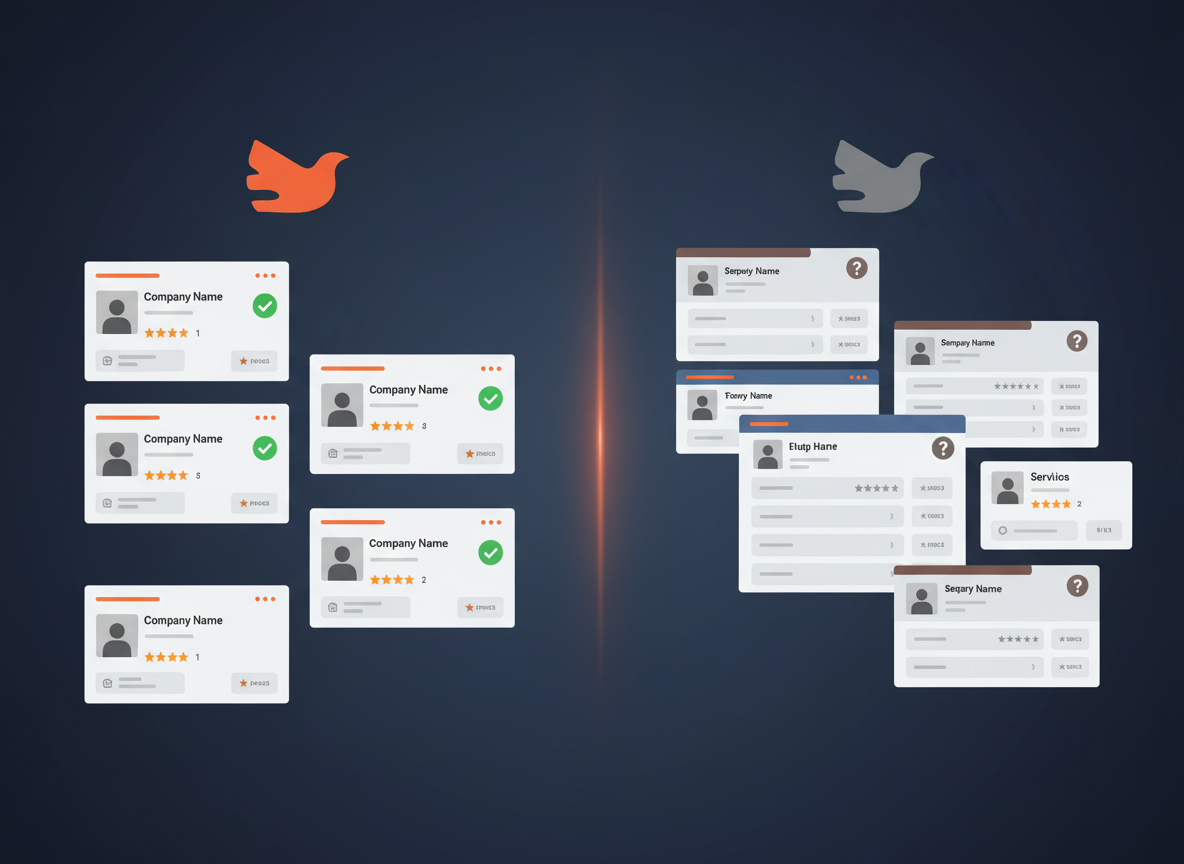
You've probably spent hours Googling "best business directory" or "where should I list my company" only to end up more confused than when you started. Trust me, I get it. Between Clutch.co, Trustpilot, Yelp, G2, and now Clutchpilot, the choices feel overwhelming.
Here's the thing most people miss: not all business directories are created equal. Some are just digital phonebooks. Others are review platforms pretending to be growth tools. And then there's a newer breed that's actually trying to solve real problems for businesses.
In this guide, I'm breaking down exactly how Clutchpilot stacks up against the major players. No corporate jargon, no biased sales pitch just honest comparisons so you can figure out where your business actually belongs.
By the end, you'll know which platform fits your business type, what features actually matter, and why some companies are ditching traditional directories for something different.
Understanding Business Directories in 2025
What Are Business Directories, Really?
Remember when your parents had that massive Yellow Pages book collecting dust by the phone? Business directories are the digital evolution of that, but they've gotten way smarter.
Today's directories aren't just listings. They're discovery engines where 87% of consumers start their research before buying anything. Whether someone needs a plumber in Houston or a software development agency in California, they're hitting up directories first.
The landscape has shifted from simple contact info to full-blown business profiles with reviews, portfolios, pricing, and even integrated services. It's less "here's a phone number" and more "here's everything you need to decide if this business is right for you."
Types of Business Directories You'll Encounter
The directory world breaks down into a few categories:
- General Directories like Yelp and Google Business Profile cast a wide net. Your bakery sits next to your dentist. Great for local discovery, but you're competing with everyone.
- Industry-Specific Directories like TripAdvisor for travel or Healthgrades for medical practices. These work when you fit neatly into one box.
- B2B Review Platforms like Clutch.co, G2, and Capterra focus on agencies and software companies. They're all about verified reviews and project portfolios.
- Hybrid Platforms like Clutchpilot combine business listings with actual services. List your company AND get web design, hosting, or SEO help from the same place.
Why Directories Still Matter (Even in 2025)
I know what you're thinking "Can't people just find me on social media?" Sure, but here's what most businesses don't realize:
Directory listings boost your local SEO by roughly 23%. Google loves seeing your business name, address, and phone number (NAP) consistent across multiple trusted sites.
Trust is huge. 67% of consumers say they're more likely to trust a business that appears on established directories. It's like a digital stamp of approval.
And for lead generation? Businesses with complete directory profiles see 5-9% more revenue per star rating increase. That's not pocket change.
Plus, with voice search exploding, directories feed information to Alexa, Siri, and Google Assistant. If you're not listed, you're invisible to voice searchers.
The Major Players: Who's Who in the Directory World
Traditional Review Platforms
- Trustpilot built its empire on e-commerce reviews. With over 260 million reviews, it's the go-to for online shoppers checking if a website is legit. If you're selling products online, Trustpilot carries weight. But if you're a service business? It's less relevant.
- Yelp owns the local business space. 178 million monthly visitors looking for restaurants, salons, contractors, you name it. The challenge? Their review filtering is aggressive, and you can't do much with your profile beyond basic info.
- Google Business Profile is non-negotiable. It's free, it's powerful, and it controls 73% of all online reviews. But it's just a listing no extra services, no portfolio showcase, nothing fancy.
B2B Directory Giants
Clutch.co became the standard for agencies and consultancies. They verify reviews, showcase portfolios, and have built solid credibility in the B2B space. But you're paying for visibility, and all they offer is the listing—no design services, no hosting, nothing beyond the directory itself.
Capterra and G2 dominate software reviews. If you sell SaaS, these platforms matter. For everyone else? Not so much.
Capterra lists over 10,745 companies across tech categories, while G2 focuses heavily on enterprise software comparisons.
Where Clutchpilot Fits
Clutchpilot took a different approach. Instead of being just another review site or just another directory, they said "what if we actually helped businesses grow?"
The platform combines business listings and verified reviews with real services—web design, hosting, SEO, branding, the works. It's like if Clutch.co and a digital agency had a baby.
Target audience? Startups, SMEs, agencies, and anyone who's tired of juggling five different vendors for their online presence.
Clutchpilot vs Clutch.co
Platform Purpose and Philosophy
Clutch.co positions itself as the B2B research platform. Their whole thing is connecting businesses with agencies through verified reviews and detailed portfolios. They're the middleman helping you find vendors, but not being one themselves.
Clutchpilot took a hybrid route. Yes, you get the directory and reviews, but you also get access to direct services. Need a website? They build it. Need hosting? They've got you covered. It's the "why send you somewhere else when we can help you here?" approach.
The philosophical difference is simple: Clutch.co is about discovery. Clutchpilot is about discovery AND delivery.
Services Offered: The Real Difference
What Clutch.co Gives You:
- Directory listing with company profile
- Review collection and verification system
- Portfolio showcase for projects
- Lead generation tools
- Awards and recognition badges
- Market research reports
What Clutchpilot Gives You:
- Free business listing with verification
- Review management system
- Custom website development services
- Hosting and security solutions
- Logo design and complete branding
- SEO services and optimization
- Social media marketing support
- Graphics, animation, and motion design
- Project portfolio showcase
See the difference? One sends you shopping for services. The other offers them in-house.
The Verification Process
Clutch.co has a thorough vetting process. They call your clients, verify projects, and manually review everything. It can take weeks to get fully verified, but the credibility is real.
Clutchpilot streamlined this to 24-48 hours for most businesses. You submit your details, they verify your business legitimacy, and you're live. It's faster without sacrificing authenticity—they still check that you're a real company with real services.
Cost Structure Reality Check
Here's where things get interesting.
Clutch.co operates on a freemium model, but to really show up in searches and get leads, you're looking at premium plans starting around £500-£2,000+ annually depending on visibility options.
Clutchpilot offers free comprehensive listings. Zero cost to get started, get verified, and start collecting reviews. Their revenue comes from the services they provide—web design, hosting, etc. If you never use those services, your listing stays free forever.
ROI-wise, if you're already planning to hire a web designer or need hosting, Clutchpilot's model makes more sense. You get the directory presence AND the services without juggling multiple vendors.
User Experience and Profile Control
Clutch.co profiles are detailed but somewhat rigid. You follow their template, upload case studies, add your team, but customization is limited.
Clutchpilot gives you more flexibility in how you present your business across different categories (they have 11 main categories with dozens of subcategories). Plus, the internal linking to service pages means your profile works harder for SEO.
Both are mobile-responsive, but Clutchpilot's interface feels more modern and less corporate.
Clutchpilot vs Trustpilot: The Service Business Showdown
What Each Platform Actually Does
Trustpilot is a review platform, period. Businesses collect reviews, display them on their websites via widgets, and use TrustScore to build credibility. It's particularly powerful for e-commerce and online retailers where purchase decisions happen fast.
Clutchpilot positions reviews as one piece of your business growth puzzle. Yes, you collect and display reviews, but you're also showcasing your portfolio, linking to your services, and potentially getting new business directly through the platform's service offerings.
If you sell products online, Trustpilot's focused approach works. If you're a service business, agency, or local provider, Clutchpilot's comprehensive approach makes more sense.
Review Collection and Display
Trustpilot's open review system means anyone can leave a review you don't need to invite them. This builds volume fast (260+ million reviews) but also means you might get reviews from people who aren't actually customers.
Clutchpilot uses a verified business approach. They confirm you're a legitimate operation before listing you, which adds a layer of trust. Reviews come from actual interactions, and you can showcase them alongside your work samples.
Display wise, Trustpilot offers embed widgets and badges you can add to your site. Clutchpilot does this too but integrates it into a full business profile that also promotes your services.
Industry Coverage and Geographic Reach
Trustpilot started in Denmark and went global, with massive presence in Europe and North America. They're strong in retail, e-commerce, travel, and financial services.
Clutchpilot targets a broader business spectrum—startups, SMEs, agencies, local service providers, even enterprise businesses across categories like business services, health and wellness, technology, education, finance, food and drink, automotive, and more. Geographic focus includes USA, UK, and expanding internationally.
When to Choose Which
Choose Trustpilot if:
- You're an e-commerce business
- You need massive review volume
- Your customers expect to see TrustScore
- You only need reviews, nothing else
Choose Clutchpilot if:
- You're a service-based business
- You want reviews PLUS growth services
- You need web design, hosting, or SEO anyway
- You prefer a one-stop platform
The Details That Matter
Review Management Capabilities
Verification Process:
- Clutchpilot: Business verification in 24-48 hours, legitimate operation checks
- Clutch.co: Multi-week verification with client interviews
- Trustpilot: Automatic for reviewers, business verification optional
- Yelp: Automated filtering, often removes legitimate reviews
Review Response Tools: All platforms let you respond to reviews. Clutchpilot and Clutch.co make this straightforward. Yelp's interface is clunky. Trustpilot charges for premium response features.
Spam Filtering: Trustpilot uses automated systems but still gets fake reviews. Clutch.co's manual verification catches most spam. Clutchpilot's business verification prevents fraudulent listings upfront.
SEO and Visibility Impact
This is where domain authority matters. Google Business Profile obviously wins for immediate local SEO impact—it IS Google.
Clutch.co has built strong domain authority (DA 82) in the B2B space. A backlink from Clutch helps your SEO.
Trustpilot (DA 91) also passes solid link equity, especially for e-commerce sites.
Clutchpilot is newer, so domain authority is building. However, the internal linking structure to service pages like custom website development and hosting & security creates an SEO ecosystem. Your profile links to relevant services, which strengthens the whole network.
Local SEO impact comes from NAP consistency. Having your business name, address, and phone number identical across Clutchpilot, Google Business Profile, and other directories signals to Google that you're legitimate.
Business Profile Features
Customization:
- Clutchpilot: Category-specific profiles, portfolio uploads, service descriptions, multiple images/videos
- Clutch.co: Structured case studies, team profiles, company info
- Trustpilot: Limited to basic business info and review widgets
- Yelp: Photos, business hours, basic services list
Media Uploads: Most platforms support images. Clutchpilot and Clutch.co let you showcase full project portfolios. Trustpilot doesn't focus on this—it's about the reviews.
Service Descriptions: Clutchpilot wins here with detailed service pages you can link to. Clutch.co has service listings but doesn't offer the actual services. Trustpilot doesn't really do service descriptions.
Lead Generation and Analytics
Contact Forms: Standard across all platforms. Clutchpilot's connect directly to your business. Clutch.co routes leads through their system (so they know what's working). Trustpilot doesn't focus on lead gen.
Analytics: Clutch.co provides detailed analytics on profile views, lead sources, and engagement. Trustpilot offers review analytics and TrustScore tracking. Google Business Profile gives you insights on how people find you. Clutchpilot provides profile performance metrics.
Conversion Tracking: Only platforms with lead gen focus (Clutch.co, Clutchpilot) really track this. You can see which visitors converted to inquiries.
The Clutchpilot Service Advantage
Here's what sets Clutchpilot apart: the integrated services aren't tacked on they're built into the platform's DNA.
Need a website while setting up your profile? Check out custom website development.
Want your site hosted securely? Hosting & security is right there.
Building a brand from scratch? Logo design starts at affordable rates.
The convenience factor is real. One platform, one invoice, one support team. No juggling vendors.
Industry-Specific Guidance: Where Should YOUR Business Be?
For Tech Startups and SaaS Companies
If you're building software, your directory strategy should include:
- Primary: G2 and Capterra for software reviews. These platforms own the SaaS comparison space.
- Secondary: Clutchpilot for general business credibility and if you need web services. Many startups use Clutchpilot for their website build, then maintain the business listing for SEO.
- Maybe: Clutch.co if you're targeting enterprise clients who research heavily.
- Skip: Yelp and Trustpilot unless you're doing e-commerce.
For Local Service Businesses
- Plumbers, electricians, salons, contractors here's your playbook:
- Mandatory: Google Business Profile. This is 80% of your local discovery.
- High Value: Clutchpilot for the comprehensive profile plus web services. Most local businesses need a website and hosting anyway.
- Consider: Yelp if you're in a major metro area. Outside big cities, Yelp traffic drops off.
- Skip: B2B platforms like Clutch.co—they're not built for local services.
For Agencies and Consultants
Marketing agencies, design firms, consultancies you need credibility markers:
Strong Options:
- Clutch.co for B2B credibility and verified reviews
- Clutchpilot for a hybrid approach—listing plus access to services
- Google Business Profile for local reach
Worth It: LinkedIn company page (not a directory but essential)
Selective: Niche directories in your specialty (marketing, design, etc.)
The portfolio showcase matters here. Both Clutch.co and Clutchpilot let you display case studies. Choose based on whether you also need web services (Clutchpilot) or just the listing (Clutch.co).
For E-commerce Businesses
Selling products online? Your priorities shift:
- Essential: Trustpilot for building purchase confidence. E-commerce buyers expect to see it.
- Non-Negotiable: Google Business Profile, especially if you have a physical location.
- Useful: Clutchpilot if you're also offering services or need web work done.
- Consider: Industry-specific sites (Amazon reviews if you sell there, etc.)
For Professional Services (Legal, Medical, Financial)
Lawyers, doctors, accountants, financial advisors—you're in a trust-heavy industry:
Specialized Directories:
- Legal: Avvo, Martindale-Hubbell, Justia
- Medical: Healthgrades, Zocdoc, Vitals
- Financial: NerdWallet, SmartAsset
General Platforms:
- Google Business Profile (everyone checks it)
- Clutchpilot for web presence and services
- Yelp (mixed value, but people check it)
Professional Networks: LinkedIn is critical for professional services
The key here is industry credibility. Generic directories help with SEO, but specialized ones build trust in your field.
Multi Location Business Strategy
Running multiple locations complicates things:
Centralized Management: Google Business Profile lets you manage all locations from one dashboard. Essential.
Consistency is Key: Every location needs identical NAP info across all directories. Even small discrepancies hurt SEO.
Scalability: Clutchpilot's category system works well for multi-location. You can list each location or use one master listing with location details.
Budget Reality: Paying for premium listings across 5 locations on Clutch.co gets expensive fast. Free platforms like Clutchpilot make more sense at scale.
What You're Actually Spending
Free vs Paid: What You Really Get
Clutchpilot:
- Free: Complete business listing, verification, review collection, portfolio showcase, category placement
- Paid: Optional services (web design, hosting, SEO) priced separately
Clutch.co:
- Free: Basic listing, minimal visibility
- Paid: Starting around £500-£2,000+ annually for premium placement, enhanced profiles, lead visibility
Trustpilot:
- Free: Review collection, basic widgets, TrustScore display
- Paid: £200-£1,000+ monthly for premium features, custom widgets, support
Yelp:
- Free: Basic listing, review management
- Paid: £300-£600+ monthly for ads and enhanced placement
Google Business Profile:
- Free: Everything. Google monetizes through ads, not listings.
The Hidden Costs Nobody Talks About
Time Investment: Setting up and maintaining profiles isn't free it costs your time. Expect 2-4 hours for initial setup per platform, plus 1-2 hours monthly for updates and review responses.
Multiple Vendor Management: If you use Clutch.co for listing but hire separate vendors for web design (£2,000-£8,000), hosting (£150-£500 annually), and SEO (£500-£2,000 monthly), you're managing 3+ relationships.Clutchpilot consolidates this—one vendor, one support contact, potentially lower costs through bundling.
Review Generation Tools: Some platforms charge for automated review requests. Others make it manual (time = money).
ROI Reality Check
Industry averages show directory listings return 3:1 on investment when done right. Service businesses often see 8:1 or higher.
For B2B companies, returns vary wildly. Some agencies get £50,000+ in projects from a single Clutch.co lead. Others get nothing for months.
The Clutchpilot advantage: even if you don't get directory leads immediately, you potentially need the services anyway. Getting web design and hosting while building your directory presence means you're not spending money JUST on the listing.
Budget Allocation Framework:
Small businesses (under £100K revenue): £500-£1,000 annually total across all directories. Stick to free platforms like Google Business Profile and Clutchpilot. Invest in services that build your online presence.
Medium businesses (£100K-£1M revenue): £1,000-£3,000 annually. Add one paid platform (Clutch.co OR Trustpilot based on industry). Maintain free listings everywhere else.
Larger businesses (£1M+ revenue): £3,000-£10,000+ annually. Premium listings on 2-3 platforms, plus dedicated review management tools.
Resource Requirements
DIY Approach:
- 4-6 hours initially per platform
- 2-3 hours monthly for maintenance
- Free but time-intensive
Hiring Out:
- Virtual assistant: £15-£30/hour for basic management
- Marketing agency: £500-£2,000/month for comprehensive directory management
- Clutchpilot's service approach: One-time costs for site/hosting, free ongoing listing
The Clutchpilot Advantage: Why It's Different
The Hybrid Model Explained
Most platforms make you choose: Are you looking for a directory listing, or are you shopping for services?
Clutchpilot said "why choose?"
The hybrid model means your business gets discovered through the directory (improving your SEO, building credibility, generating leads), and when you need web design, hosting, branding, or marketing—you're already working with a platform you trust.
This solves the "multiple vendor nightmare" where you're managing a web developer, a hosting company, an SEO consultant, and trying to maintain consistency across all of them.
Real scenario: You're launching a new business. Instead of finding a directory, THEN finding a web designer, THEN finding hosting, THEN figuring out SEO Clutchpilot handles all of it. Your business listing goes live while they build your site on their hosting. Everything's integrated.
Unique Features Worth Highlighting
24-48 Hour Verification: Most B2B directories take weeks. Clutchpilot gets you approved and visible in 1-2 days. For new businesses, this speed matters.
Free Comprehensive Listing: Not "free but useless"—actually free and actually valuable. Full profile, unlimited updates, review collection, portfolio showcase.
Integrated Service Marketplace: Need something? Browse packages at https://clutchpilot.com/packages, check portfolios at https://clutchpilot.com/project, or explore services.
Category-Specific Optimization: With 11 main categories and dozens of subcategories, your listing appears in relevant searches. A Houston HVAC company isn't competing with London software developers—you're grouped logically.
Internal Linking Strategy: Every service page links to relevant businesses and vice versa. This creates an SEO web that helps everyone on the platform rank better.
Brand Values in Action
Clutchpilot's core values aren't just marketing copy:
- Innovation: The hybrid model itself was innovative. Most directories didn't think to offer services directly.
- Trust: 24-48 hour verification, transparent pricing, no hidden premium upsells on the listing itself.
- Creativity: The platform design, the way categories work, the service integration it's thoughtfully built.
- Growth: The whole point is helping businesses scale. Not just listing them, but actively providing tools for growth.
Success Stories from the Platform
Businesses switching from competitor platforms report a few consistent themes:
- Faster Setup: Getting verified on Clutchpilot took days vs weeks on Clutch.co
- Cost Savings: Companies needing web services anyway saved 20-30% by bundling through one provider vs hiring separately
- Simplified Management: One login, one support team, one invoice instead of juggling multiple vendors
- Better Integration: Websites built on Clutchpilot's platform automatically optimized for the directory listing and vice versa
One marketing agency reported: "We were paying Clutch £1,200 annually for visibility, then spending £4,000 on web redesign, £600 on hosting, and £1,500 on SEO setup elsewhere. Clutchpilot's service packages cost us less overall, and the directory listing came free."
How to Actually Use This Info
Getting Started on Clutchpilot (Step-by-Step)
Step 1: Visit the Registration Page Head to https://clutchpilot.com/business/register
Step 2: Gather Your Information Before you start, have ready:
- Official business name (as registered)
- Business address and phone number
- Business email (not personal)
- Business description (100-200 words)
- Your category/industry
- 5-7 high-quality business images
- Portfolio pieces (if applicable)
- Social media links
- Website (if you have one—if not, Clutchpilot can build it)
Step 3: Complete Your Profile Fill in every section. Incomplete profiles rank lower in searches and look unprofessional. The platform walks you through:
- Basic information
- Categories and services
- Business description
- Contact details
- Media uploads
- Portfolio/project showcase
Step 4: Verification Submit for verification. Within 24-48 hours, Clutchpilot reviews your information, confirms your business legitimacy, and approves your listing.
Step 5: Go Live Once approved, your business appears in searches, category pages, and the main directory at https://clutchpilot.com/businesses.
Maximizing Your Listing Impact
Complete Profile Checklist:
□ Business description: 150-250 words, keyword-rich but natural □ All contact information filled in □ 5-7 high-quality images (including logo, team photos, workspace, work samples) □ Video if available (product demos, company intro) □ Portfolio with 3-5 best projects □ All relevant categories selected □ Social media profiles linked □ Website connected (or built through Clutchpilot) □ Service descriptions detailed □ Business hours accurate
Visual Content Strategy:
Your profile photo is often the first thing people see. Use:
- Professional logo (get one designed at https://clutchpilot.com/logo-design if needed)
- High-resolution photos (minimum 1200px wide)
- Authentic images (real office, real team, real work)
- Consistent branding across all images
Category Selection Importance:
Clutchpilot has comprehensive categories. Choose carefully:
- Primary category: Your main business type
- Secondary categories: Additional services you offer
- Be specific (don't just choose "Business Services"—drill down to "Marketing & Advertising > Digital Marketing")
Keyword Integration:
Your business description should naturally include:
- Location-based keywords (e.g., "Houston web design services")
- Service keywords (e.g., "custom website development")
- Industry terms your customers search for
- Avoid keyword stuffing—write for humans first
Example: "Clutchpilot offers custom website development, secure hosting, and professional logo design services for startups and SMEs across the USA. Our team specializes in creating mobile-responsive websites that drive conversions."
Review Generation Strategy
Reviews make or break directory profiles. Here's how to get them ethically:
- Timing Matters: Ask for reviews right after delivering great work. Strike while the experience is fresh and positive.
- Make It Easy: Send a direct link to your Clutchpilot profile review section. The fewer clicks, the more reviews you'll get.
- Personalize the Request: "Hey [Name], would you mind leaving a quick review on Clutchpilot about the website we built for you?" beats generic mass emails.
- Respond to Every Review: Good reviews: Thank them specifically Negative reviews: Address the concern professionally, offer to resolve offline
- Build Momentum: Start with your 3-5 happiest clients. Initial reviews encourage others to leave theirs.
Never:
- Buy fake reviews
- Incentivize reviews with discounts (against most platforms' policies)
- Write your own reviews
- Pressure clients aggressively
Leveraging Clutchpilot's Services
When to Use Web Design Services: If you don't have a website, or yours is 5+ years old, outdated, or not mobile-friendly get it rebuilt. Check packages and options at https://clutchpilot.com/packages.
Hosting Integration Benefits: Hosting your site through Clutchpilot's hosting services means:
- Your directory profile links directly to your hosted site
- Faster load times (good for SEO)
- Security handled professionally
- One support team for everything
SEO Service Coordination: SEO works best when your website, hosting, and directory listings are aligned. Clutchpilot can optimize all three simultaneously instead of you coordinating between three different vendors.
Branding Consistency: Get your logo designed on Clutchpilot, use it on your directory profile, integrate it into your website everything matches from day one.
Multi Platform Strategy (Yes, You Should Be on Multiple Directories)
Core Platform Selection:
Choose 3-5 directories max. More than that, and you can't maintain them properly.
Recommended Stack:
- Google Business Profile (mandatory, free, local SEO powerhouse)
- Clutchpilot (free listing, service access, comprehensive profile)
- Industry-specific directory (Clutch.co for agencies, Trustpilot for e-commerce, etc.)
- Maybe: Yelp if you're local and in a major city
NAP Consistency (Critical for SEO):
Your business Name, Address, and Phone number must be IDENTICAL across all platforms. Even small differences (Inc. vs Incorporated, Street vs St.) confuse Google and hurt rankings.
Update All Platforms Simultaneously:
When you change addresses, phone numbers, or services, update everywhere the same day. Use a spreadsheet to track where you're listed and what credentials you used.
Common Mistakes That Kill Your Directory Success
Profile Errors to Avoid
- Incomplete Information: Filling out 60% of your profile and calling it done. Google and users both favor complete profiles. Studies show complete profiles get 7x more engagement.
- Inconsistent Business Details: Your website says "123 Main Street." Your directory says "123 Main St." Google sees two different businesses.
- Poor Quality Images: Blurry photos, stretched images, stock photos that don't represent your business. Use real, high-resolution images or skip the section entirely.
- Generic Descriptions: "We're a full-service digital agency offering quality solutions." This tells me nothing. Be specific: "We build custom WordPress websites for healthcare providers in Texas, with HIPAA-compliant hosting and ongoing support."
- Wrong Category Selection: A restaurant choosing "Retail Shopping" or being too vague. Drill down to the most specific category that fits.
Review Management Mistakes
- Ignoring Reviews: 73% of consumers lose trust in businesses that don't respond to reviews—positive OR negative.
- Slow Response Times: Respond within 24-48 hours. Longer than that, and you look neglectful.
- Defensive Responses: Never argue with reviewers publicly. Acknowledge their concern, apologize if appropriate, offer to resolve offline. "Thank you for your feedback. We'd love to make this right. Please email us at [email protected] so we can address this directly."
- Asking Only Happy Customers: It looks suspicious when you have only 5-star reviews. Some 4-star reviews with thoughtful responses actually build more trust.
- Fake Reviews: Don't do it. Platforms catch this eventually, and the damage to your reputation is permanent.
Strategic Errors
- Spreading Too Thin: Being on 12 directories but maintaining none of them well is worse than being on 3 and doing them right.
- Set and Forget: Directories aren't billboards they need updates. Add new photos quarterly, update services when they change, respond to reviews regularly.
- Ignoring Analytics: Most platforms show you how people find your profile and what they click on. Use this data. If nobody clicks your "Contact Us" button, maybe your description isn't compelling.
- Not Tracking ROI: You should know which directories generate actual business. Use UTM parameters in your links or ask new customers "How did you find us?"
- Failing to Claim Existing Listings: Many directories auto-generate business profiles from public data. Someone might have already listed your business. Claim and update these before they spread wrong information.
The Future of Business Directories (Where This is All Headed)
Emerging Trends Changing the Game
AI-Powered Matching: Platforms are building smarter algorithms that match businesses with ideal customers based on more than keywords. Project requirements, budget ranges, industry experience—AI can factor in dozens of variables.
Voice Search Optimization: "Alexa, find a web designer near me" or "Hey Google, what's the best-rated HVAC company in Houston?" Voice searches are exploding, and directories feed this data to digital assistants. If your profile isn't optimized for natural language queries, you're missing out.
Video Integration: Static profiles are becoming dinosaurs. Expect more platforms to emphasize video—company intros, service demonstrations, client testimonials. Video increases engagement by 80% compared to text-only profiles.
Social Commerce Integration: The line between social media, e-commerce, and directories is blurring. Future directories might let customers purchase services directly through the platform without leaving to visit your website.
Hyper Local Targeting: "Near me" searches dominate. Directories are getting better at showing businesses within specific neighborhoods, not just cities. If you're in East Austin vs West Austin, that specificity will matter more.
How Clutchpilot is Evolving
Platforms that don't innovate die. Clutchpilot's roadmap includes:
- Service Expansion: More service categories, more specialized offerings, deeper integration between directory and services.
- Enhanced Analytics: Better tracking of how profile visitors become customers, where traffic comes from, which services get the most inquiries.
- Technology Integration: API access for businesses to manage their profiles programmatically, better CRM integrations, automated review requests.
- User Experience Improvements: Faster profile loading, better mobile experience, more intuitive search and filtering.
What This Means for Your Business
Stay Adaptable: What works in 2025 might not work in 2027. Be ready to update your directory strategy as platforms evolve.
Invest in Video: Start creating video content now. It's not going away, and early adopters get better results.
Optimize for Voice: Use natural language in your descriptions. Think about how people actually speak when asking for your services.
Monitor Your Competitors: Check where they're listed, how their profiles look, what they're doing differently. Competitive intelligence from directories is free and valuable.
Final Recommendations by Business Type
If You're a Startup: Start with free platforms. Get on Google Business Profile and Clutchpilot immediately. Use Clutchpilot's service packages for your website and hosting. Skip paid directories until you're generating steady revenue.
If You're a Local Service Business: Prioritize Google Business Profile first, Clutchpilot second, and consider Yelp if you're in a major city. Invest in your Clutchpilot profile and potentially use their web services to look professional online.
If You're a B2B Agency: You need credibility markers. Start with Google Business Profile and Clutchpilot, then consider adding Clutch.co if you target enterprise clients who research heavily. The decision between Clutch.co and Clutchpilot comes down to whether you need just the listing or the listing plus services.
If You're E-commerce: Trustpilot is your primary review platform. Add Google Business Profile for search presence. Clutchpilot makes sense if you also need web services or want a comprehensive business profile beyond just reviews.
Take Action
1. Claim Your Free Clutchpilot Listing: Visit https://clutchpilot.com/business/register and set up your profile. It's free, takes less than 30 minutes, and you'll be verified within 24-48 hours.
2. Optimize Your Google Business Profile: If you haven't already, claim and complete your Google Business Profile. This is non-negotiable for local visibility.
3. Explore Clutchpilot's Services: Check out the service packages at https://clutchpilot.com/packages. If you need web design, hosting, or SEO work, getting it through the same platform as your directory listing creates valuable integration.
4. Set Up Your Review Collection System: Create a simple process for asking happy customers for reviews. A templated email with a direct link to your Clutchpilot profile works well.
5. Monitor and Maintain: Set a quarterly reminder to update your directory profiles with new photos, services, or information. Respond to reviews within 24-48 hours.
The directory landscape will keep evolving, but businesses that establish strong profiles on the right platforms now will maintain advantages for years. Clutchpilot's combination of free comprehensive listings and integrated services makes it a smart addition to any business's online presence strategy.
Stop overthinking it. Start with Clutchpilot, optimize your Google Business Profile, and grow from there.
Your business deserves to be found by the right customers. Make it happen.
Ready to get started?
- Register your business: https://clutchpilot.com/business/register
- Explore services: https://clutchpilot.com/packages
- Browse the directory: https://clutchpilot.com/businesses
- Read more insights: https://clutchpilot.com/blog
Comments (0)